
 Happy Christine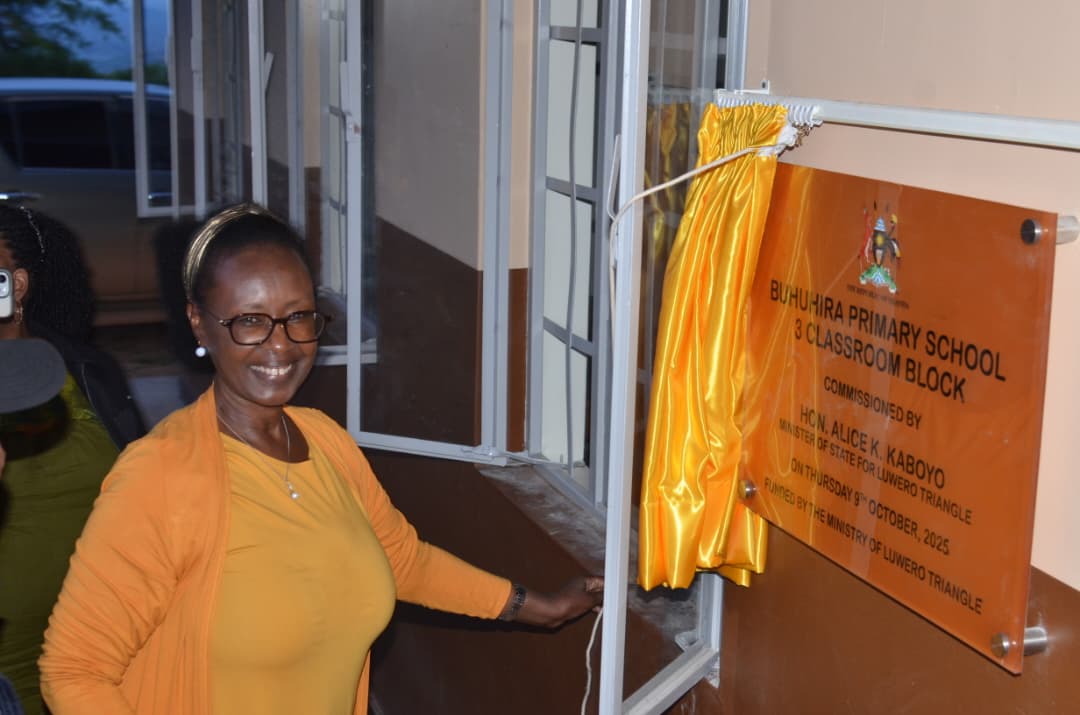
The past is not a quiet ghost in Kitholhu Subcounty, Kasese. It is a living, breathing presence, a story etched into the very soil and whispered in the determined eyes of the widows and orphans who gathered there on October 9th. This was not a typical Independence Day celebration. While the nation prepared to raise its flag, this community was gathering to lower its head in remembrance, marking 36 years since a single, brutal day stole nine of its men. In a moving memorial service presided over by Hon. Alice Kaboyo, the Minister of State for Luwero Triangle, and accompanied by Hon. Godfrey Baluku Kabbyanga Kiime, Minister of State for Information, Communication Technology and National Guidance, the enduring legacy of courage, loyalty, and patriotism of these nine heroes was honored, their memories a stark reminder of a conflict that left families forever scarred.
The story, recounted with a pain that time has done little to dull, tells of NALU rebels, disguised in army uniforms, who descended upon this community on Independence Day in 1989. They targeted these men for their steadfast support of the NRM government under President Yoweri Kaguta Museveni. In a moment of devastating violence, they were killed, leaving behind widows and a generation of children to carry the heavy, lifelong burden of sudden loss and survival. For 36 years, these families have navigated a world without their breadwinners, their personal tragedy forever linked to the nation’s day of freedom.

Hon. Alice Kaboyo stood before the more than 500 gathered family members, relatives, and friends, not just as a government official, but as a bearer of a nation’s belated condolences. She affirmed the profound importance of the occasion, calling it a “noble and good tradition to remember these brave men.” Her words wove a direct thread from the intimate grief in Kitholhu to the highest offices of the nation, referencing the recent 25th National Prayer Breakfast held at State House Entebbe. She connected the theme of that event, “Fear not, repent and serve the Lord,” to the core message she carried to the people. “This independence day our focus is on forgiveness and reconciliation and that’s what the government is preaching,” Kaboyo stated, her voice resonating with the collective yearning for healing. She spoke of being moved by the testimonies of others who have walked the path of forgiveness, and echoed the President’s urging for all Ugandans to “avoid planning or executing evil, regardless of the injustices faced.” Her plea was powerful and direct: “Let us forgive, and ask God to forgive those who wronged us. We lost husbands, wives, children, and parents… we should never witness such tragedies in Uganda again.”

But the day was about more than words and prayers. It was about tangible acknowledgment. In a significant act of support, Hon. Kaboyo officially handed over 800 iron sheets from the Ministry, with each of the nine affected families receiving 50 sheets to help rebuild or improve their homes. Beyond this, a crucial financial support was announced: each widow would receive an akasiimo of 1.5 million shillings, and each family unit would receive a further 5 million shillings. With this support came a heartfelt encouragement from the Minister for them to “keep that togetherness,” a recognition that their strength has always lain in their unity. Kaboyo assured them of the government’s continued support, outlining her office’s ongoing “affirmative action to make sure that they are uplifted and also gain social economic transformation.” She passionately encouraged the families and the wider community to form SACCOs, emphasizing that “a united family develops faster… no one is left behind.” She spoke of the vital skills forged through shared family projects, communication, teamwork, and problem-solving, urging them to work towards a shared goal for a better future.

Looking ahead, the Minister also addressed the community’s desire for a permanent physical memorial. “On monuments; we always build monuments in different areas where we lost members of communities,” she stated. “We are going to think about it seriously and we shall agree with the local government where the monuments will be.” This promise points to a future where the sacrifice of these nine men will be set in stone, a lasting educational symbol for generations to come. Hon. Godfrey Kabbyanga Kiime added his voice to the tributes, paying homage to the men’s “enduring legacy of courage, loyalty, and patriotism,” framing their sacrifice within the broader narrative of the nation’s hard-won stability.
As the service drew to a close, the atmosphere in Kitholhu was a complex tapestry of lingering grief, acknowledged pain, and a fragile, newfound hope. The prayers led by the clergy had sanctified the ground of memory, the words of the leaders had validated decades of silent suffering, and the material support offered a handhold toward a more secure future. The journey of these nine families, now publicly embraced by the state through the work of Alice Kaboyo, is a microcosm of Uganda’s own ongoing journey, a continuous struggle to reconcile a painful past with the promise of a peaceful, prosperous future, built on the foundations of forgiveness, unity, and an unwavering commitment to ensuring that such a tragedy truly never happens again.


 Mudecha Ramathan

 Gotcha News Uganda
 Achelam Jethro


 Kyalingabira Florence


 888starz_eroi

 Rory Muhame


 Nayebare Angel
