
 Oola Joshua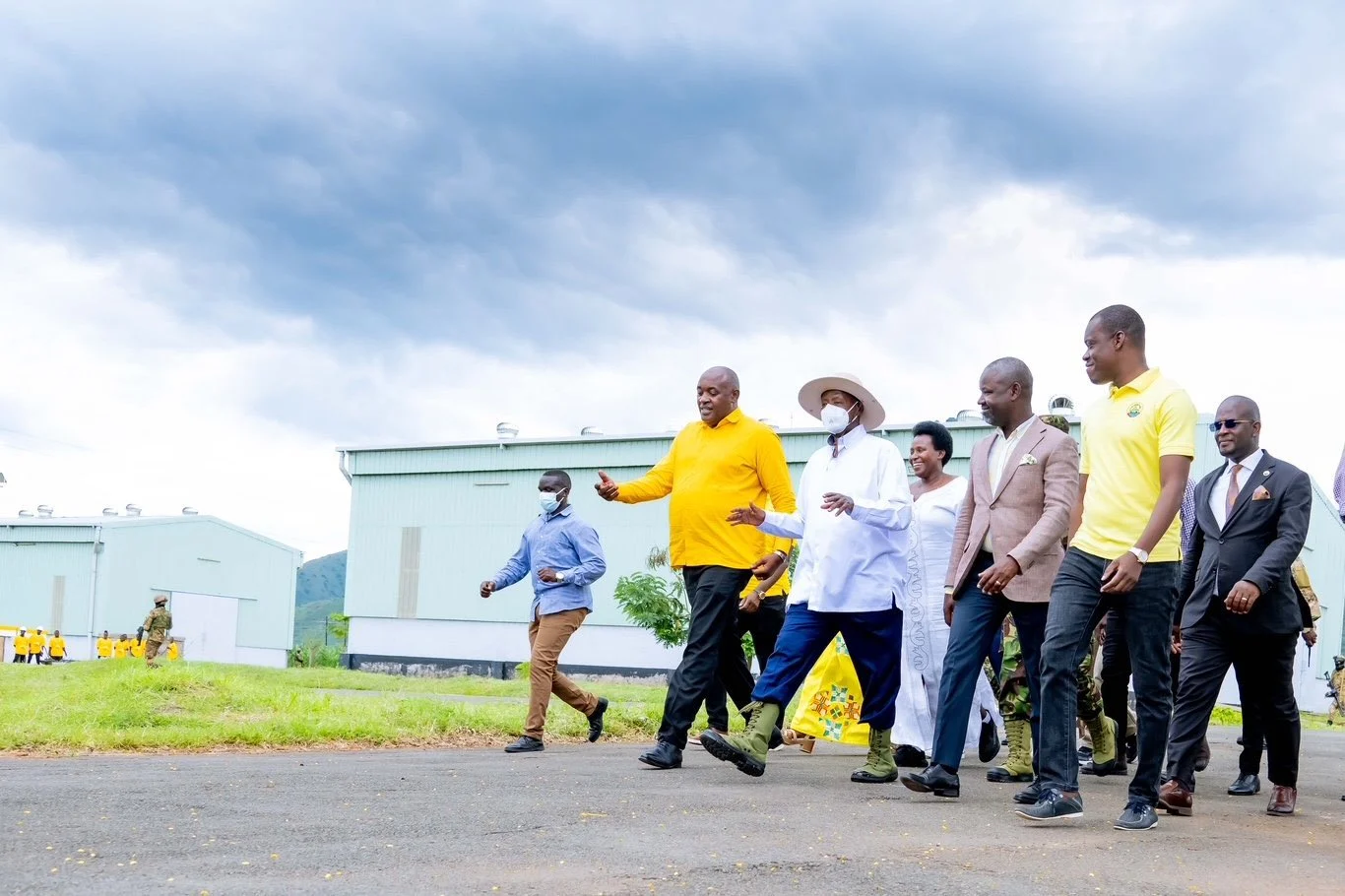
President Yoweri Museveni has officially opened the Rwenzori Presidential Initiative Industrial Hub in Mubuku, Kasese District, marking a significant step in Uganda’s push to equip young people with practical skills for self-reliance. The state-of-the-art facility, part of a nationwide network of vocational training centers, aims to tackle unemployment by providing hands-on training in various trades.
During the commissioning ceremony, President Museveni called on local leaders, parents, and communities to support the government’s efforts in promoting both formal education and vocational training. He stressed that while academic education remains important, skills development is crucial in preparing youth for the job market. “This industrial hub is a strategic tool to fight poverty and unemployment,” Museveni said. “It complements our formal education system. Let our young people come, learn a skill, and become economically productive.”
The Rwenzori Industrial Hub is part of the broader Presidential Initiative on Skilling the Girl and Boy Child, which targets out-of-school youth and school leavers. The facility offers training in carpentry, tailoring, welding, baking, hairdressing, and other trades that are essential for community development and economic growth. The initiative reflects the government’s commitment to creating opportunities for young Ugandans to gain employable skills and start their own businesses.
Local leaders welcomed the project as a timely intervention to address youth unemployment in the region. Kasese District Chairperson Eriphazi Muhindi pledged to mobilize young people to enroll in the programs offered at the hub. He described the facility as a game-changer that will not only reduce unemployment but also curb crime by keeping youth engaged in productive activities. “We are grateful for this investment,” Muhindi said. “It is going to change lives, reduce crime, and foster entrepreneurship among our young people.”

President Museveni also used the occasion to emphasize the need for a mindset change among Ugandans, particularly the youth. He encouraged them to embrace vocational work and use the skills they acquire to create jobs and wealth for themselves and their communities. The president highlighted the importance of self-reliance, noting that vocational training provides a practical pathway out of poverty.
The Rwenzori Industrial Hub joins a growing list of regional hubs established under the Presidential Initiative, reinforcing the government’s vision of creating a skilled and industrious population. These centers are strategically located across the country to ensure that youth in different regions have access to quality vocational training. The initiative aligns with Uganda’s broader development goals, including the National Development Plan III, which prioritizes human capital development and job creation.
Residents of Kasese expressed optimism about the opportunities the hub will bring. Many young people who attended the launch ceremony said they were eager to enroll in the training programs. “This is a great chance for us to learn skills that can help us start our own businesses,” said one aspiring tailor. “I have been struggling to find work, but now I see hope in gaining a skill that can sustain me.”
The government’s focus on vocational training comes at a time when unemployment remains a major challenge, particularly among the youth. According to recent statistics, a significant percentage of young Ugandans are either underemployed or lack the skills needed in the job market. Initiatives like the Rwenzori Industrial Hub aim to bridge this gap by providing practical training that aligns with market demands.
Officials from the Ministry of Education and Sports, who oversee the Presidential Initiative, said the hubs are designed to be sustainable and responsive to local needs. Each center is equipped with modern tools and staffed by experienced trainers to ensure that students receive high-quality instruction. The curriculum is tailored to equip learners with both technical skills and entrepreneurial knowledge, enabling them to start their own ventures after graduation.
President Museveni’s commissioning of the Rwenzori Industrial Hub underscores his administration’s commitment to youth empowerment and economic transformation. The facility is expected to produce a new generation of skilled workers who can contribute to Uganda’s industrialization agenda. By investing in vocational training, the government hopes to reduce dependency on formal employment and encourage more young people to venture into entrepreneurship.
As the hub begins operations, local leaders and community members are tasked with ensuring its success. Mobilization campaigns will be crucial in attracting trainees, particularly those who have dropped out of school or have been unable to find work. The government has also called on private sector players to partner with the hubs by offering apprenticeships and employment opportunities to graduates.
The launch of the Rwenzori Industrial Hub is a milestone in Uganda’s efforts to build a skilled workforce. It represents a shift towards practical education that prepares youth for real-world challenges. With similar hubs already operational in other regions, the initiative is steadily transforming the lives of thousands of young Ugandans, giving them the tools they need to build a brighter future.
For Kasese District, the hub is more than just a training center—it is a beacon of hope. As the first cohort of students begins their lessons, the community watches with anticipation, hopeful that the skills acquired will translate into tangible economic benefits. The success of this initiative could serve as a model for other regions, proving that vocational training is a viable solution to unemployment and poverty.
President Museveni’s message was clear: education and skills development go hand in hand in building a prosperous Uganda. The Rwenzori Industrial Hub stands as a testament to this vision, offering young people a chance to rewrite their futures through hard work and determination. As the government continues to roll out similar projects across the country, the dream of a skilled, self-reliant, and industrious population is gradually becoming a reality.


 Achelam Jethro
 Happy Christine
 Gotcha News Uganda

 Kyalingabira Florence
 Mudecha Ramathan


 888starz_eroi

 Rory Muhame


 Nayebare Angel
